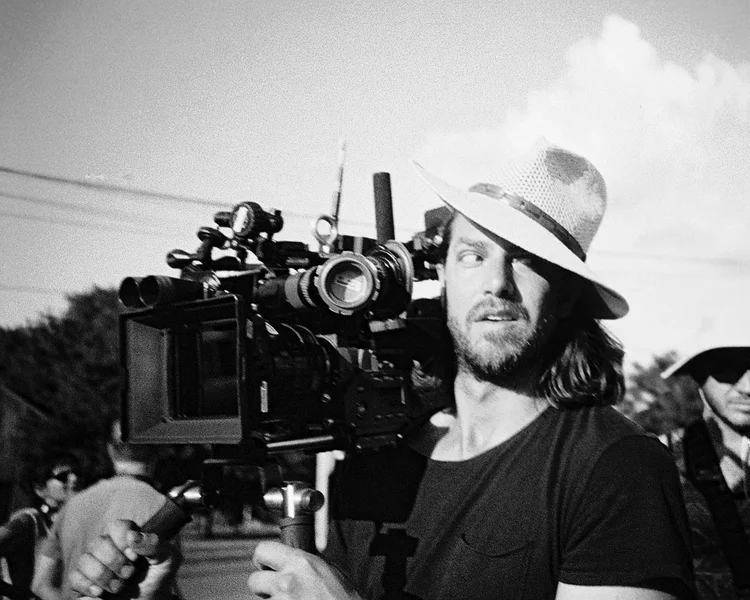
“The standout aspect is the movie’s cinematography. “We the Animals” looks unlike any other movie I watched at Sundance. Shot on 16mm, the images appear as if they were created by rich oil paints with dark undertones. The effect makes Jonah’s world seem scarier at times but also dreamier as his reality slips away into animated sequences of his drawings. This movie is so gorgeous, it even makes drone footage look ethereal rather than pedestrian.”
— RogerEbert.com
“Zak Mulligan emphasizes the movie’s 90s setting by choosing mostly 16-millimeter film. This gives its rough-rural exteriors and rundown interiors a dreamy, nostalgic glaze speckled with lambent light, like the fingerprints of memory.”
— Jeannette Catsoulis, New York Times
“A crucial element of the film is Zak Mulligan’s cinematography... Mr. Mulligan gives us images of exceptional purity, grace and intimacy: the brothers’ faces, never still; their darting eyes; the things they touch, the way they snuggle or roughhouse with their parents.”
— Joe Morgenstern - Wall Street Journal
“Visually, the picture is a thing of great beauty. Zak Mulligan’s lensing with the Red camera system is shimmeringly luminous as well as vigorously agile and was a deserved recipient of the Sundance cinematography award.”
— Todd McCarthy, Variety
“The standout aspect is the movie’s cinematography. “We the Animals” looks unlike any other movie I watched at Sundance. Shot on 16mm, the images appear as if they were created by rich oil paints with dark undertones. The effect makes Jonah’s world seem scarier at times but also dreamier as his reality slips away into animated sequences of his drawings. This movie is so gorgeous, it even makes drone footage look ethereal rather than pedestrian.”
— RogerEbert.com
“Zak Mulligan emphasizes the movie’s 90s setting by choosing mostly 16-millimeter film. This gives its rough-rural exteriors and rundown interiors a dreamy, nostalgic glaze speckled with lambent light, like the fingerprints of memory.”
— Jeannette Catsoulis, New York Times
“A crucial element of the film is Zak Mulligan’s cinematography... Mr. Mulligan gives us images of exceptional purity, grace and intimacy: the brothers’ faces, never still; their darting eyes; the things they touch, the way they snuggle or roughhouse with their parents.”
— Joe Morgenstern - Wall Street Journal
“Visually, the picture is a thing of great beauty. Zak Mulligan’s lensing with the Red camera system is shimmeringly luminous as well as vigorously agile and was a deserved recipient of the Sundance cinematography award.”
— Todd McCarthy, Variety
“The standout aspect is the movie’s cinematography. “We the Animals” looks unlike any other movie I watched at Sundance. Shot on 16mm, the images appear as if they were created by rich oil paints with dark undertones. The effect makes Jonah’s world seem scarier at times but also dreamier as his reality slips away into animated sequences of his drawings. This movie is so gorgeous, it even makes drone footage look ethereal rather than pedestrian.”
— RogerEbert.com
“Zak Mulligan emphasizes the movie’s 90s setting by choosing mostly 16-millimeter film. This gives its rough-rural exteriors and rundown interiors a dreamy, nostalgic glaze speckled with lambent light, like the fingerprints of memory.”
— Jeannette Catsoulis, New York Times
“A crucial element of the film is Zak Mulligan’s cinematography... Mr. Mulligan gives us images of exceptional purity, grace and intimacy: the brothers’ faces, never still; their darting eyes; the things they touch, the way they snuggle or roughhouse with their parents.”
— Joe Morgenstern - Wall Street Journal
“Visually, the picture is a thing of great beauty. Zak Mulligan’s lensing with the Red camera system is shimmeringly luminous as well as vigorously agile and was a deserved recipient of the Sundance cinematography award.”
— Todd McCarthy, Variety